


Becoming a skipper is about much more than knowing how to steer a yacht.
When you take responsibility for a yacht, its crew and everyone on board, you need to understand navigation, weather, tides, pilotage, safety and the rules that govern vessels at sea. This is where RYA Day Skipper Theory comes in.
The RYA Day Skipper Theory course provides the essential shore-based knowledge needed to begin making informed decisions as a skipper. It is an important step for sailors who want to progress from being a crew member to taking responsibility for a yacht, particularly when planning and navigating coastal passages.
RYA Day Skipper Theory is a shore-based navigation and seamanship course designed to introduce sailors to the knowledge required to skipper a yacht during daylight hours in familiar waters and suitable conditions.
It is not a sailing course. Instead, it concentrates on the knowledge behind the decisions a skipper makes.
You learn how to interpret charts, plan passages, understand tidal information, assess weather conditions and use the rules of the road to make safe decisions on the water.
For someone progressing through the RYA pathway, the theory course provides an important foundation for the practical Day Skipper course.
It is possible to learn how to sail without knowing how to navigate a yacht. But being able to sail and being able to skipper are two different things. A skipper needs to know where the yacht is, where it is going, what lies between the two points and what conditions might be encountered along the way. Imagine leaving harbour for a day sail. The wind is favourable and the yacht is sailing beautifully. But then you need to enter an unfamiliar bay.
Which way should you approach?
Where is the deeper water?
When will the tide change?
Are there hazards nearby?
What will the weather do later in the day?
Which navigation marks should you expect to see?
These are the types of questions that theory helps you answer.
RYA Day Skipper Theory covers a broad range of practical subjects.
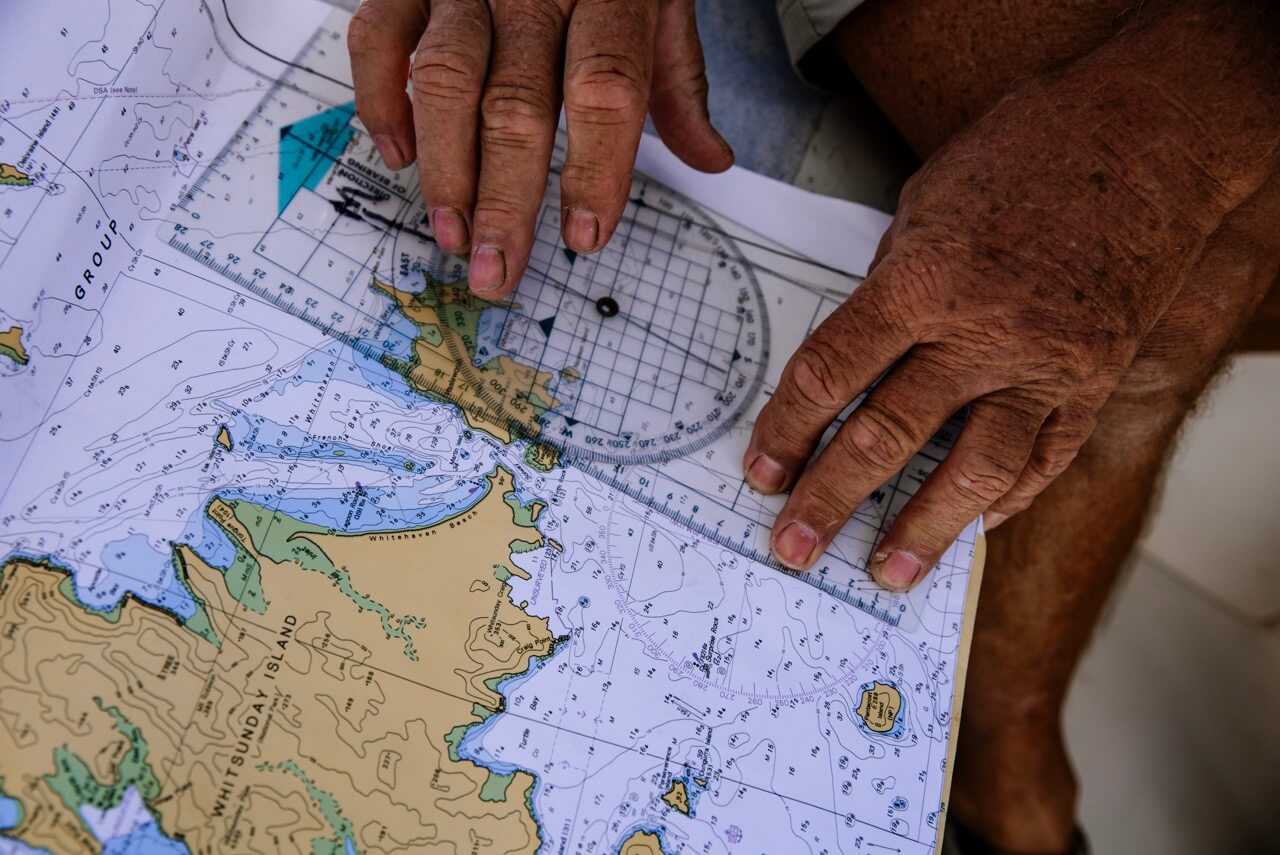
One of the fundamental skills is learning how to work with nautical charts.
You will learn how to identify:
Understanding a chart allows you to build a picture of the underwater and navigational environment around you.
Navigation is at the heart of the Day Skipper syllabus.
You will learn how to plan and monitor a passage rather than simply point the boat towards a destination.
This includes working with courses, bearings, distances and estimated times of arrival.
You will also learn how to determine your position and recognise the limitations of different navigation methods.
Modern yachts have excellent electronic navigation systems, but a skipper should understand what the equipment is telling them rather than blindly following a magenta line on a screen.
Tides can have a significant effect on a yacht’s course, speed and passage time.
Day Skipper Theory introduces you to tidal heights, tidal streams and the information contained in tide tables and tidal stream information.
You learn how to calculate tidal heights and understand how tidal streams can affect a vessel’s movement.
This becomes particularly important when entering shallow water, navigating narrow channels or planning a passage around tidal gates.
Weather is another major part of being a skipper.
The theory course introduces the basic principles of weather that sailors need to understand, including:
The objective isn’t to turn you into a meteorologist.
It is to help you understand the information available to you and recognise how changing weather may affect your passage and the safety of your crew.
A skipper should be thinking about the weather before leaving the marina, not after conditions deteriorate.
Every skipper needs to understand the rules that apply when vessels encounter one another.
The International Regulations for Preventing Collisions at Sea—commonly known as the COLREGs or collision regulations—provide the framework for determining how vessels should behave.
Day Skipper Theory introduces subjects such as:
These rules can seem complicated initially, but understanding them is essential to safe navigation.
When you’re sailing during the day, navigation marks can provide valuable information about where you are and where you should go.
At night, lights become particularly important. The Day Skipper syllabus introduces the different types of navigation marks and helps you understand what they are telling you. You will also learn how to interpret the characteristics of navigation lights shown on nautical charts. Being able to look at a chart and then recognise the corresponding marks and lights on the water is an important practical skill.
One of the biggest differences between sailing as crew and sailing as skipper is responsibility. A skipper shouldn’t simply leave the marina and decide where to go along the way. A passage should be considered beforehand. This includes looking at the route, weather, tides, hazards, navigation marks, likely conditions and alternatives.
A basic passage plan should answer questions such as:
Where are we going?
How are we going to get there?
What hazards are along the way?
What are the tidal conditions?
What weather can we expect?
What alternatives do we have if conditions change?
Good passage planning doesn’t mean everything will go according to plan. It means you have considered your options before you need them.
Navigation isn’t only about crossing open water. Eventually, you have to get into somewhere.
Pilotage is the process of navigating a vessel in confined or unfamiliar waters, such as approaching a harbour, anchorage or marina. This requires you to interpret the chart and combine it with what you can see around you. A pilotage plan might identify navigation marks, depths, courses, clearing bearings and other useful information for a particular approach. It is one of the areas where the connection between theory and practical sailing becomes particularly obvious.
A skipper is responsible for more than navigation. You also need to consider the people on board and the vessel itself. The theory course introduces important aspects of seamanship and safety, including preparation for a passage and dealing with situations that may arise at sea. The exact practical application will depend on the yacht, location and circumstances, but the underlying principle remains the same:
A good skipper thinks ahead.
It isn’t necessary to be an experienced navigator before starting the course. However, there is a reasonable amount to learn. Some subjects—particularly chartwork, tidal calculations and navigation—can initially seem unfamiliar. The good news is that these skills become much easier with practice.
You don’t need to memorise everything after seeing it once. The important thing is to understand the principles and become comfortable applying them. Like sailing itself, navigation is a skill that improves with practice.
Not necessarily in every situation, but completing the theory first can be extremely useful. The practical RYA Day Skipper course is about putting knowledge into practice.
If you already understand charts, tides, navigation, weather and the collision regulations, you can concentrate more of your attention on actually skippering the yacht. You can look at a chart and understand what you’re seeing. You can discuss a passage plan with your instructor. You can understand why a particular route has been chosen.
And, most importantly, you begin to understand the reasoning behind the decisions being made on board. This is why theory and practical training work so well together.
RYA Day Skipper is not intended to be a complete beginner’s sailing course.
The RYA recommends that candidates have some previous sailing experience before undertaking the practical course. The theory component can be completed without being an experienced skipper, but having some time on the water can make many of the concepts easier to understand.
If you’re completely new to sailing, a course such as RYA Competent Crew can provide a useful introduction to life on board before progressing towards Day Skipper.
For many sailors, Day Skipper is the beginning rather than the end of their skipper training.
As experience grows, the next steps through the RYA pathway can include RYA Coastal Skipper and eventually RYA Yachtmaster. The progression isn’t simply about collecting certificates. Each stage builds experience, knowledge and confidence.
The ultimate goal is to become a skipper who can assess a situation, make sound decisions and take responsibility for the yacht and crew.
Modern yachts give sailors access to remarkable technology.
Chartplotters can display our position. GPS can tell us exactly where we are. Weather information is available on a smartphone. AIS can show other vessels around us. But technology doesn’t replace understanding. A chartplotter doesn’t know whether the weather is deteriorating faster than expected. A GPS doesn’t decide whether a passage should be abandoned. An autopilot doesn’t understand that the skipper needs to change the plan. Those decisions still belong to the person in charge.
That is why RYA Day Skipper Theory remains such an important part of the journey towards becoming a skipper.
The aim isn’t simply to know where the yacht is. It’s to understand where you are, where you’re going, what could happen along the way—and what you’re going to do about it.
Keep exploring the Whitsundays, sailing, seamanship and life on the water.


Take your sailing further with Mainstay Sailing.


Check out our Youtube videos!

Coral Sea Marina
Shingley Drive
Airlie Beach
QLD 4802
AUSTRALIA
Postal address
PO Box 890
Cannonvale
QLD 4802
AUSTRALIA
Lat: 20° 16′ South
Long: 148° 43′ East
Phone: +61402429152

