
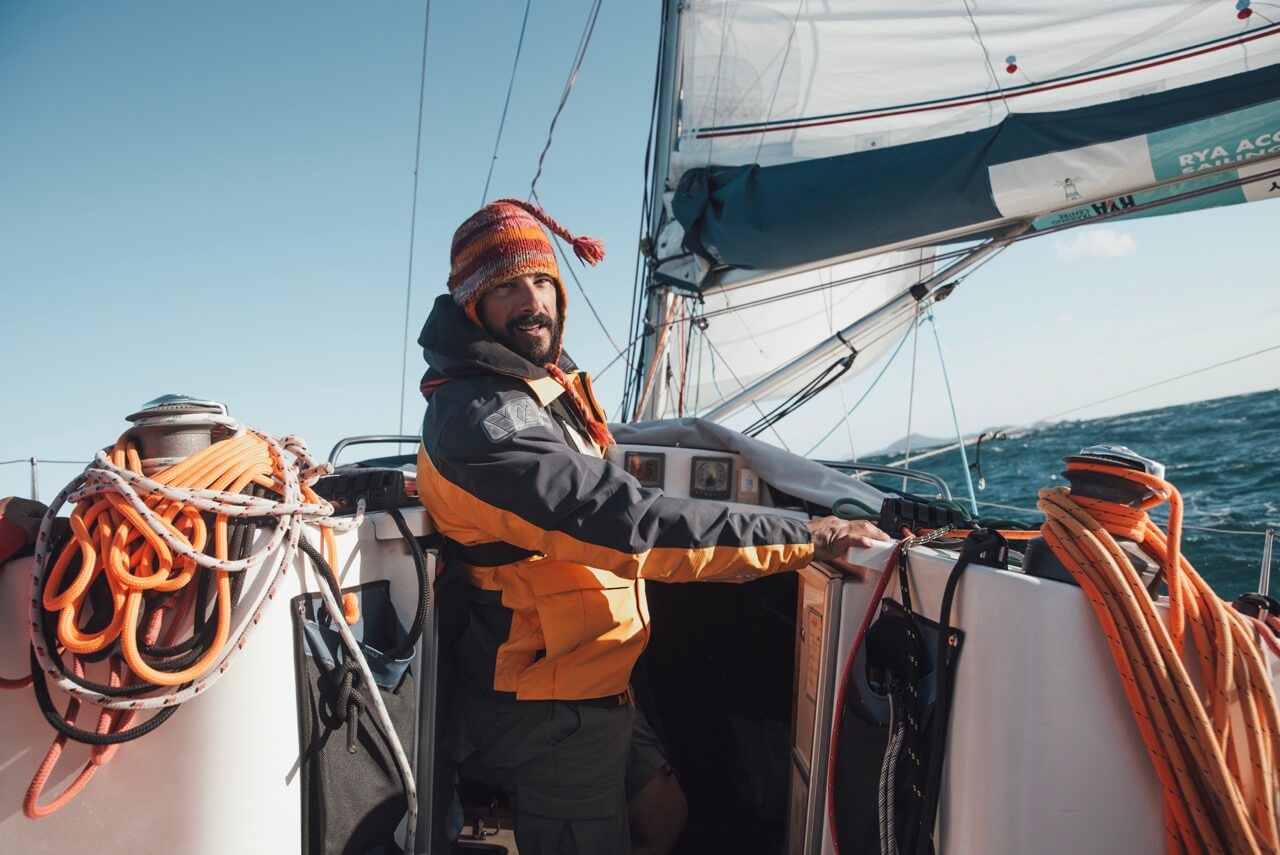



There is a moment in every sailor’s journey when the question changes.
At first, it is simply: “Can I sail?”
Can I hoist the sails? Can I tack and gybe? Can I steer a yacht? Can I get the boat moving in the right direction?
Then, at some point, the question becomes much more important:
“Can I skipper?”
Because being able to sail a yacht and being able to take responsibility for one are two very different things.
Learning to sail is an exciting process. You learn how the wind affects the sails, how the yacht responds to the helm, how to tack, gybe, reef and manoeuvre under power.
With experience, many sailors become very comfortable handling a yacht.
But a skipper’s responsibility extends far beyond making the boat move.
A skipper is responsible for the people, the yacht, the passage and the decisions.
That means looking beyond what is happening right now and thinking about what might happen next.
What will the weather do this afternoon?
Where will we be when the tide changes?
Is that anchorage suitable for the conditions tonight?
How much fuel do we have?
What are the navigation hazards along the route?
Is the crew comfortable and capable of handling what is coming?
And perhaps most importantly:
“Should we actually be doing this?”
That last question is one of the defining differences between someone who can sail and someone who can skipper.
Good sailing is not necessarily about doing more. Often, it is about knowing when not to do something.
A skipper might decide to shorten sail before the wind increases.
They might change the planned route because the weather forecast has deteriorated.
They might decide that an anchorage which looked perfect on the chart is not appropriate for the wind direction expected overnight.
They might turn around, delay departure or change the itinerary altogether.
None of those decisions necessarily looks dramatic.
In fact, some of the best skipper decisions can look incredibly uneventful.
That’s because successful skippering is often about anticipating problems before they become problems.
Being able to follow a GPS or chartplotter is useful. But navigation is about much more than watching a little boat icon move across a screen.
A skipper needs to understand the waters they are travelling through.
That includes charts, depths, hazards, marks, tides, currents, weather, restricted areas and the limitations of the yacht itself.
In the Whitsundays, this becomes particularly important.
We have spectacular sailing grounds, but we also have reefs, islands, narrow passages, changing tides and currents, exposed waters and rapidly changing weather conditions.
Knowing where you are is important.
Understanding where you will be in an hour or two, and what conditions you are likely to encounter when you get there, is skipper thinking.
One of the biggest differences between sailing and skippering is how you look at the weather.
A sailor might look at a forecast and think:
“That looks like good sailing weather.”
A skipper thinks:
“What does that forecast mean for my boat, my crew and my passage?”
Wind direction matters.
Wind strength matters.
Gusts matter.
Tides matter.
Sea state matters.
And so does the forecast several hours from now — not just the conditions outside the cockpit at this moment.
A good skipper develops the habit of looking ahead.
The objective isn’t to prove that you can handle difficult conditions.
The objective is to make sensible decisions so that you don’t unnecessarily put yourself, your crew or your yacht into difficult conditions in the first place.
When you are sailing by yourself, your decisions affect you.
When you are skipper, they affect everyone on board.
Your crew may have very different levels of experience. One person may be an experienced sailor while another may be stepping aboard a yacht for the first time.
A skipper needs to understand that.
Good skippering includes briefing the crew, allocating tasks, explaining what is happening and making sure everyone understands what is expected of them.
It also means recognising when someone is tired, uncomfortable or struggling.
A skipper isn’t simply the person standing behind the wheel.
A skipper is the person ultimately responsible for making the whole operation work safely and effectively.
There is another important characteristic of a good skipper that is sometimes overlooked:
Knowing what you don’t know.
There is absolutely nothing wrong with checking a chart twice, asking another experienced sailor for advice, looking at another weather model or changing your plans because you are not comfortable with a situation.
In fact, that is good seamanship.
Confidence is valuable.
But overconfidence is dangerous.
A good skipper doesn’t need to demonstrate that they know everything. They need to make sound decisions with the information available to them.
Experience is invaluable, but experience alone can sometimes teach sailors bad habits.
Structured training gives you an opportunity to understand not just how to do something, but why you are doing it.
This is where the RYA pathway becomes particularly valuable.
The RYA Competent Crew course is a great introduction to life on board and helps sailors develop practical skills and confidence as part of a crew.
The RYA Day Skipper course takes the next step. It introduces the responsibilities involved in skippering a yacht, including navigation, passage planning, pilotage, boat handling, safety and decision-making.
From there, the RYA Coastal Skipper course develops those skills further, particularly when planning and undertaking more demanding coastal passages.
And for sailors looking to take their skills to a professional level, the RYA Yachtmaster qualification represents another significant step in the journey.
The important point is that these aren’t simply certificates that say, “I can sail a yacht.”
They represent a progression in knowledge, experience, judgement and responsibility.
There isn’t a magic moment when someone suddenly transforms from sailor into skipper.
It happens gradually.
You start thinking further ahead.
You begin watching the weather differently.
You understand the effect of tide and current.
You become more aware of your crew.
You start considering the consequences of your decisions rather than simply whether you can physically carry them out.
And eventually, you realise that skippering isn’t really about being the person who knows everything.
It’s about being the person who is prepared to take responsibility.
Being able to sail is about controlling the yacht.
Being a skipper is about understanding the bigger picture.
It’s knowing the boat, the weather, the water, the crew and your own limitations.
It’s planning carefully, remaining flexible and making decisions before circumstances make them for you.
And sometimes, the best decision a skipper can make is the simplest one:
“Not today. We’ll go tomorrow.”
That isn’t a failure to sail.
That’s good seamanship.
At Mainstay Sailing in the Whitsundays, we believe becoming a confident skipper is a journey. Whether you are taking your first steps with RYA Competent Crew or progressing towards Day Skipper, Coastal Skipper or Yachtmaster, the aim isn’t simply to teach you how to operate a yacht.
It’s to help you develop the knowledge, confidence and judgement to make good decisions when you are the person in charge.
Because there is a big difference between being able to sail a yacht and being trusted to skipper one.
And that difference is where the real journey begins.
Keep exploring the Whitsundays, sailing, seamanship and life on the water.


Take your sailing further with Mainstay Sailing.


Check out our Youtube videos!

Coral Sea Marina
Shingley Drive
Airlie Beach
QLD 4802
AUSTRALIA
Postal address
PO Box 890
Cannonvale
QLD 4802
AUSTRALIA
Lat: 20° 16′ South
Long: 148° 43′ East
Phone: +61402429152

