
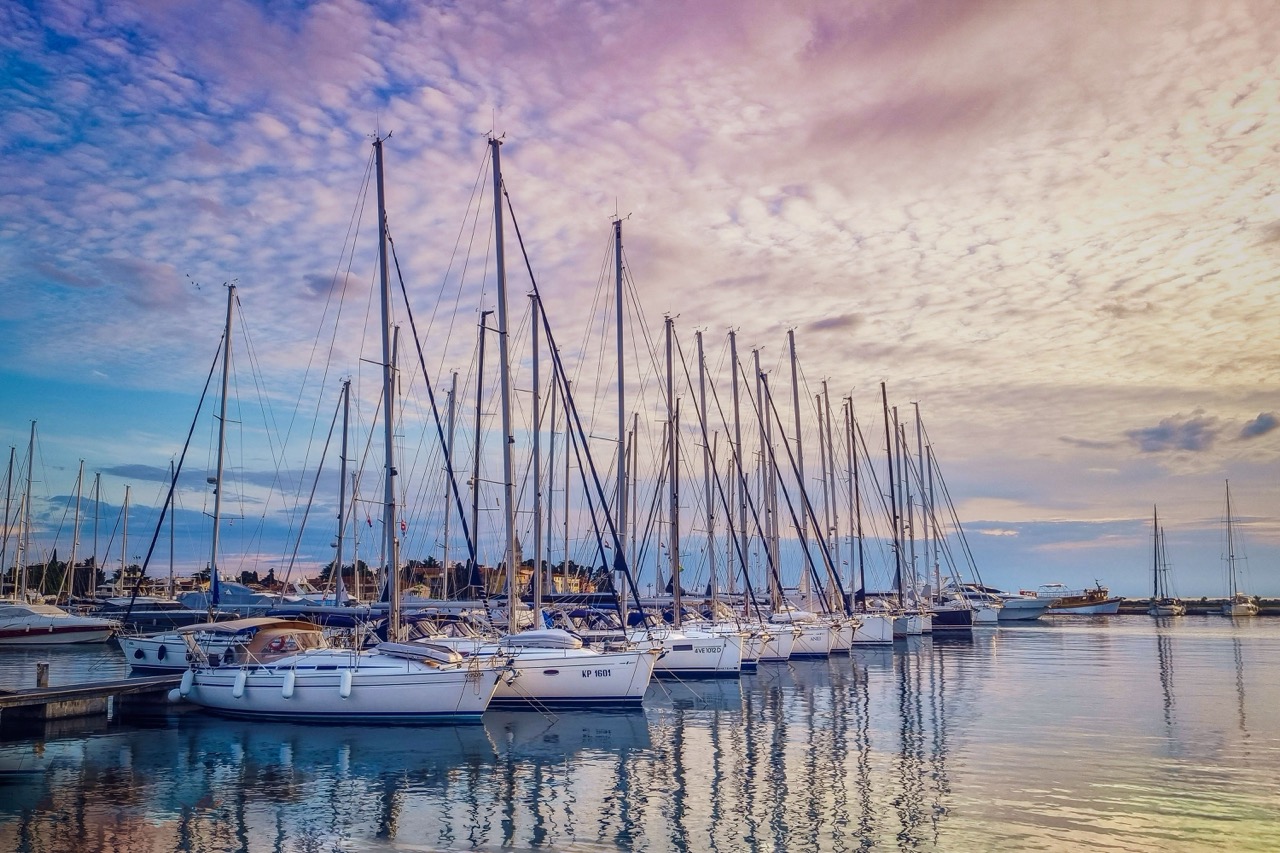



Buying your first yacht is one of those decisions that can feel both incredibly exciting and slightly overwhelming.
You start by looking at boats online. Then you visit a marina. Before long, you’re comparing hull lengths, engines, sail plans, keel configurations, draft, beam, displacement, number of cabins, heads, solar panels, batteries, watermakers and an astonishing number of things you didn’t even know existed.
And somewhere along the way, you realise something important:
Buying a yacht isn’t really about buying a boat. It’s about buying the kind of sailing life you want to live.
That is where the decision should start.
Not with the brand.
Not with the number of cabins.
And certainly not with how impressive the yacht looks when you first step aboard.
The right first yacht is the one that suits how you intend to sail, where you intend to sail, who you intend to sail with and, perhaps most importantly, what you can comfortably handle.
Before looking at yacht advertisements, ask yourself a simple question:
What do I actually want to do with this boat?
There is a huge difference between:
A yacht that is perfect for weekend sailing can be completely unsuitable for extended cruising.
Likewise, buying a yacht capable of crossing oceans doesn’t necessarily make sense if most of your sailing will be short coastal trips.
It is very easy to buy the boat you dream about owning rather than the boat you will actually use.
Try to be honest with yourself.
If you imagine spending six months sailing around the world but realistically expect to get away for two weeks a year, those are two very different boats.
This sounds obvious, but it is one of the most important questions you can ask.
If you are primarily going to sail as a couple, do you really need a yacht designed to sleep eight people?
Perhaps you do.
But remember that every extra cabin, bathroom and living space comes with additional weight, maintenance and cost.
And there is another consideration:
A yacht designed for eight people can feel enormous when there are only two of you aboard.
Think about your normal crew rather than the maximum number of people you might occasionally invite.
For a couple, a well-designed two-cabin yacht may be far more enjoyable than a four-cabin yacht.
You may have more storage, a larger owner’s cabin, a more spacious saloon and fewer systems to maintain.
And when you do have guests, they can always bring their own boat.
Well… perhaps don’t tell them that.
This is where things get interesting.
There is a natural tendency to think:
Bigger is better.
More space. More comfort. More storage. Bigger cabins. Bigger cockpit.
And yes, bigger yachts can offer tremendous advantages.
But bigger also means:
There is also the practical question of handling the boat.
A 40-foot yacht doesn’t simply behave like a 30-foot yacht but with another ten feet added.
As yachts get larger, everything becomes more significant.
A few knots of wind across a marina can turn a routine manoeuvre into a situation requiring considerably more planning.
This is particularly important if you are going to sail short-handed.
Buy enough boat for what you want to do — but don’t buy more boat than you can comfortably manage.
This is one of the great sailing debates.
And there is no universal answer.
A modern cruising catamaran can offer enormous living space, excellent stability, shallow draft and a fantastic platform for spending time aboard.
For families and extended cruising, that space can be incredibly attractive.
A monohull offers a very different experience.
You get the traditional sailing characteristics many sailors love: heeling, a more pronounced connection with the sea and often a very rewarding sailing experience.
There are also practical differences in marina availability, manoeuvring, draft, maintenance and cost.
Neither is automatically the right choice.
The question is:
Which sailing experience do you want?
Don’t choose a catamaran because someone tells you they are better.
Don’t choose a monohull because someone tells you that’s what a “real sailor” should sail.
Go sailing on both.
Then decide.
When looking at a yacht, people naturally head inside.
They look at the galley.
The cabins.
The bathrooms.
The saloon.
All important.
But when you are actually sailing, where are you going to spend most of your time?
In the cockpit.
Look carefully at:
A beautiful interior won’t compensate for a cockpit that is awkward to work in.
Take the helm.
Don’t just sit there for thirty seconds.
Imagine you’re actually sailing.
Can you see the sails?
Can you see forward?
Can you see around the coachroof?
Can you communicate easily with the crew?
Can you reach the controls?
What happens when you’re docking?
What happens when you’re sailing at night?
What happens when it’s raining and blowing 25 knots?
A helm position that feels fantastic on a calm afternoon can feel very different in difficult conditions.
If you’re buying a sailing yacht, don’t forget that the expensive bits aren’t limited to the engine.
The rig is one of the most important systems on the boat.
Look at:
Age matters.
Condition matters.
Maintenance history matters.
And replacement costs can be significant.
A yacht with a tired set of sails and ageing rigging may initially look like a bargain.
It might be.
Or it might be a very expensive bargain.
Sailors love talking about sailing.
But when you’re manoeuvring into a marina with no room to spare, you’ll suddenly become very interested in your engine.
Before buying, find out:
And then ask yourself:
Can I actually get to the engine?
Some yachts make routine engine maintenance remarkably easy.
Others appear to have been designed by someone who never intended an actual human being to service the engine.
If a mechanic needs three hours to remove half the boat before reaching the oil filter, you’re going to hear about it in the service bill.
Modern yachts can be incredibly comfortable.
Solar panels.
Lithium batteries.
Inverters.
Watermakers.
Refrigeration.
Air conditioning.
Electric winches.
Bow thrusters.
Autopilots.
Chartplotters.
AIS.
Radar.
Satellite communications.
The list goes on.
All of these things can make cruising better.
But every system introduces another potential failure point.
This doesn’t mean you should avoid technology.
It means you should understand it.
The more systems your yacht has, the more systems you need to understand, maintain and eventually repair.
When looking at a yacht, ask yourself:
“If this system stops working tomorrow, can I still sail the boat?”
That is a very useful question.
A yacht can look enormous until you start putting your belongings aboard.
Then suddenly there isn’t anywhere to put anything.
Think about:
Good storage isn’t glamorous.
But after a few weeks aboard, you will appreciate it more than another decorative cushion.
This is difficult.
Boat manufacturers know exactly how to make a yacht look irresistible.
Polished timber.
Beautiful upholstery.
Huge beds.
Modern kitchens.
Big televisions.
Bright bathrooms.
It all looks fantastic.
But remember:
You aren’t buying a hotel room. You’re buying a sailing vessel.
Look beyond the cosmetics.
Open lockers.
Look underneath floors.
Inspect the bilges.
Look behind panels.
Check the engine compartment.
Inspect the rig.
Look at the electrical installation.
Look at the plumbing.
Look at the deck hardware.
A yacht can have a beautiful interior and still require a significant amount of work.
This is the question many first-time buyers don’t ask early enough.
The purchase price is only the beginning.
There are ongoing costs for:
Berthing
Where will the yacht live?
Insurance
What does your insurer require in terms of qualifications, experience and maintenance?
Maintenance
There will always be something.
Antifouling
The underwater part of your yacht doesn’t maintain itself.
Rigging
Standing and running rigging eventually needs attention.
Sails
Sails wear out.
Engine servicing
Engines require regular maintenance.
Batteries and electrical systems
These have finite lives.
Safety equipment
Some equipment has service intervals or expiry dates.
Unexpected repairs
And then there are the things that break at exactly the wrong time.
The golden rule?
Keep money aside for making the yacht your yacht.
If you are buying a used yacht, get an independent marine survey.
Not your mate who has owned a yacht for twenty years.
Not the broker.
Not the previous owner.
An independent professional surveyor.
And depending on the yacht, consider specialist inspections for things such as:
A survey isn’t a guarantee that nothing will go wrong.
It is another layer of information before you commit a significant amount of money.
This sounds obvious.
But don’t buy a yacht purely because you walked through it at a boat show.
Go sailing.
Preferably in a range of conditions.
Pay attention to:
A yacht can look fantastic alongside the dock and feel completely different at sea.
This is perhaps the most important question of all.
Imagine yourself alone on the yacht.
Now imagine:
Would you know what to do?
You don’t need to be an expert before buying your first yacht.
But you should have an honest understanding of your capabilities.
And if you don’t yet have the experience, that’s not a reason not to buy a yacht.
It’s a reason to learn before you need to learn the hard way.
This is something many new sailors struggle with.
They want to get the decision exactly right.
The perfect yacht.
The perfect size.
The perfect layout.
The perfect equipment.
The perfect price.
It doesn’t exist.
Your first yacht will teach you an enormous amount about what you actually like.
Perhaps you discover that you love offshore sailing.
Perhaps you discover that you only really enjoy sailing with your partner.
Perhaps you want more storage.
Perhaps you want less maintenance.
Perhaps you discover you don’t need four cabins.
Perhaps you discover that you really do want that watermaker after all.
That’s valuable information.
Your first yacht can be part of the journey rather than the final destination.
There is a wonderful temptation in sailing to spend years researching boats.
Forums.
YouTube.
Boat shows.
Broker websites.
Reviews.
Specifications.
And before you know it, you’ve become an expert on twelve yachts you’ve never sailed.
At some point, you need to stop researching and start sailing.
Because the yacht that looks perfect on paper might not be the yacht that feels right under sail.
And the yacht you initially overlooked might turn out to be exactly what you needed.
So when you’re choosing your first yacht, forget the question:
“What is the best yacht?”
Instead ask:
“What yacht is right for the sailing I want to do?”
That changes everything.
Before you buy, spend as much time as possible on different boats.
Charter them.
Crew on them.
Take courses on them.
Talk to owners.
Go to boat shows.
Sail different designs.
And if you can, sail the same yacht in different conditions.
Because the more boats you experience, the easier it becomes to recognise what matters to you.
At Mainstay Sailing, we spend a lot of time talking about boats — but more importantly, we spend a lot of time sailing them.
And that’s probably the best way to understand what your first yacht should be.
Don’t buy the yacht because you love the boat.
Buy it because you love the sailing you are going to do with it.
Thinking about buying your first yacht? Before you make the leap, get some time on the water and build the skills and confidence to handle your new boat. Explore RYA training with Mainstay Sailing in the Whitsundays.
Keep exploring the Whitsundays, sailing, seamanship and life on the water.




Take your sailing further with Mainstay Sailing.


Check out our Youtube videos!

Coral Sea Marina
Shingley Drive
Airlie Beach
QLD 4802
AUSTRALIA
Postal address
PO Box 890
Cannonvale
QLD 4802
AUSTRALIA
Lat: 20° 16′ South
Long: 148° 43′ East
Phone: +61402429152

