
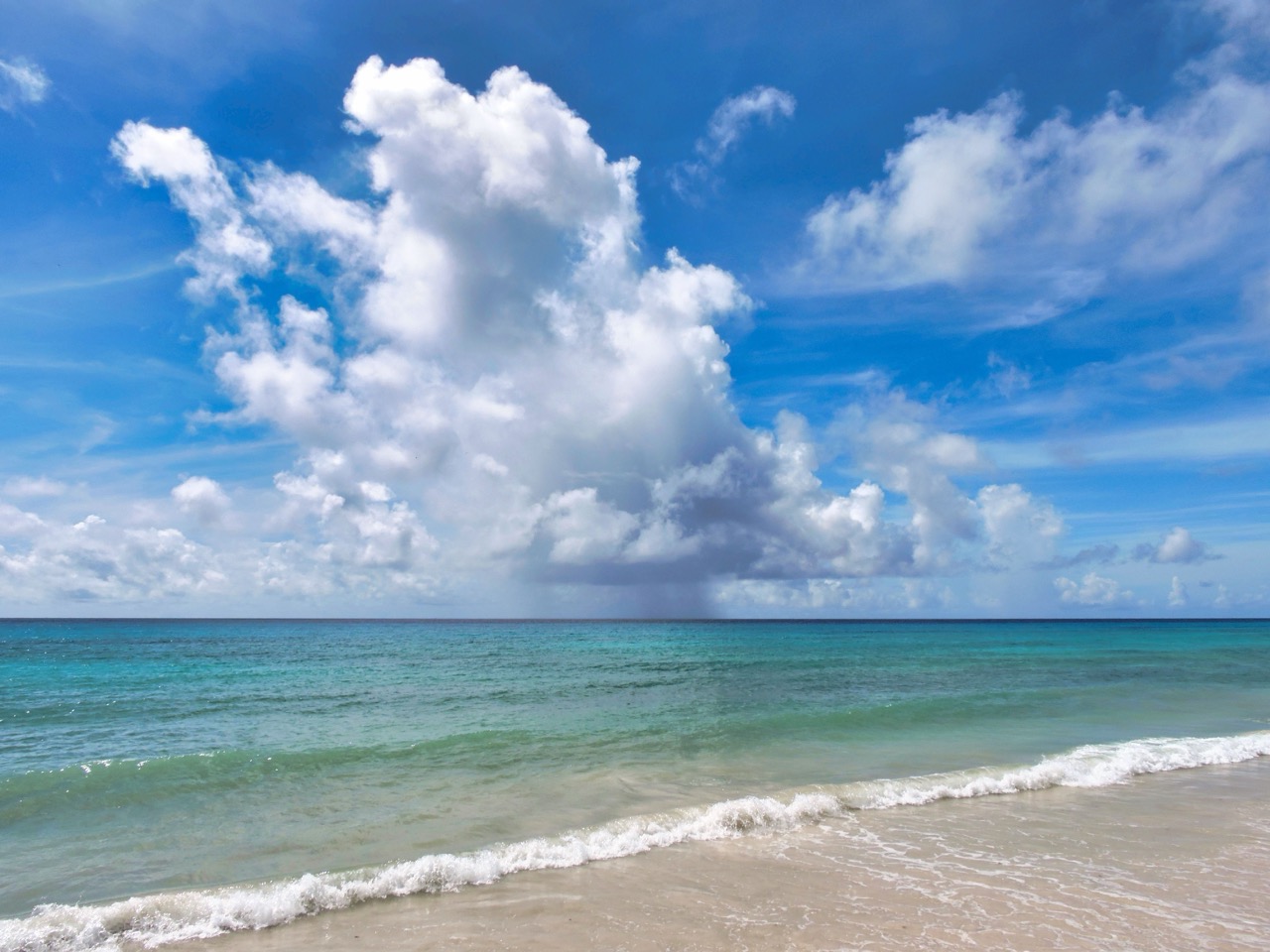



The Whitsundays may look like paradise from the beach, but out on the water there are two forces that shape almost every sailing day: weather and tides.
The Whitsunday region has a substantial tidal range — generally around 2–3 metres, with ranges of up to about 4 metres — so the rise and fall of the sea is not something sailors can simply ignore.
And then there is the weather. The Whitsundays enjoy a warm climate throughout the year, with the cooler, drier months generally bringing settled conditions and the familiar south-easterly trade winds. Summer is warmer and more humid, with the wet season bringing a greater chance of tropical showers and changing conditions.
For a sailor, however, weather isn’t simply about whether it is going to rain.
It is about wind direction, wind strength, gusts, sea state, swell, visibility, thunderstorms and how all of these things interact with the islands and the tides
The wind is arguably the most important part of any sailing forecast. In the Whitsundays, the prevailing south-easterly trade winds are a familiar feature, particularly during the cooler months. But the wind isn’t necessarily the same everywhere. One of the great advantages of sailing amongst the 74 Whitsunday Islands is the amount of shelter they can provide.
Move around a headland, through a channel or into an inlet and the wind can change dramatically. You might leave one anchorage with 15 knots of wind on the nose, round the corner of an island and suddenly find yourself in relatively calm water. This is one of the things that makes sailing the Whitsundays so enjoyable — the islands create their own little weather systems and pockets of shelter.
A forecast might say:
SE 15–20 knots
But that doesn’t tell the whole story.
A sailor also needs to consider:
A 15-knot breeze in sheltered water can feel very different from 15 knots blowing across a long stretch of open water. And that brings us to the other major player.
The Whitsundays have a significant tidal range. Queensland Parks notes that the average range is around 2–3 metres, with the potential for a range of up to 4 metres. That’s a lot of water moving in and out of the islands. For sailors, tides affect much more than simply how deep the water is.
They influence:
Navigation.
A passage that looks straightforward on the chart can behave very differently depending on the stage of the tide.
Anchoring.
A boat sitting comfortably in 5 metres of water at high tide may find itself in considerably less water several hours later.
Moorings.
Your boat will swing around its mooring as the tide changes direction.
Currents.
The movement of tidal water can become surprisingly strong through narrow passages and around headlands.
Beaches and reefs.
Whitehaven Beach and the surrounding sandbars and reef areas can look completely different depending on the state of the tide.
In fact, Queensland Parks specifically notes that access to many areas and activities in the Whitsundays depends on tide times and heights.
One of the most important concepts for anyone sailing in the Whitsundays is wind against tide. When wind and tidal current are moving in the same direction, conditions can be relatively smooth. When they oppose each other, the water can become much steeper and more uncomfortable. This is particularly important when planning passages through channels and around exposed headlands. It is one of those situations where looking only at the wind forecast isn’t enough. The wind tells you what the atmosphere is doing. The tide tells you what the water is doing.
A good skipper considers both.
Before we leave the marina, we don’t simply ask:
“What’s the weather doing today?”
We look at the bigger picture.
What is the forecast wind?
How strong are the gusts?
Which direction is the wind coming from?
What is the sea state?
Where are the sheltered areas?
What time are high and low water?
What will the tide be doing during our passage?
And perhaps most importantly:
What happens if the forecast changes?
Because forecasts are exactly that — forecasts.
Conditions can change, and a good skipper needs to be prepared to change the plan with them. That’s particularly important in the tropics, where a beautiful blue-sky morning can be followed by a sudden shower, squall or thunderstorm.
The wonderful thing about sailing here is that the weather doesn’t have to be perfect for sailing to be enjoyable. Quite the opposite. The Whitsunday Islands offer countless options for finding shelter, changing your route and adapting your day to the conditions. That’s what makes sailing here so special. You’re not simply sailing from A to B. You’re reading the conditions, looking at the chart, watching the sky, feeling the wind and deciding where the best place to be is right now. And that is perhaps one of the most important lessons in sailing:
A good sailor doesn’t try to defeat the weather. They learn to work with it.
Whether you’re joining us for an RYA course or one of our Whitsunday sailing adventures, weather and tides are part of every day on the water. We don’t just look at the forecast once and forget about it. Conditions are monitored throughout the day, and our sailing plans can be adapted to suit the conditions. Because sailing isn’t about following a rigid itinerary regardless of what nature has in store.
It’s about understanding the environment, making good decisions and enjoying the journey. And in the Whitsundays, there is hardly a better classroom for learning how to do exactly that.
Keep exploring the Whitsundays, sailing, seamanship and life on the water.



Take your sailing further with Mainstay Sailing.

Check out our Youtube videos!

Coral Sea Marina
Shingley Drive
Airlie Beach
QLD 4802
AUSTRALIA
Postal address
PO Box 890
Cannonvale
QLD 4802
AUSTRALIA
Lat: 20° 16′ South
Long: 148° 43′ East
Phone: +61402429152

