
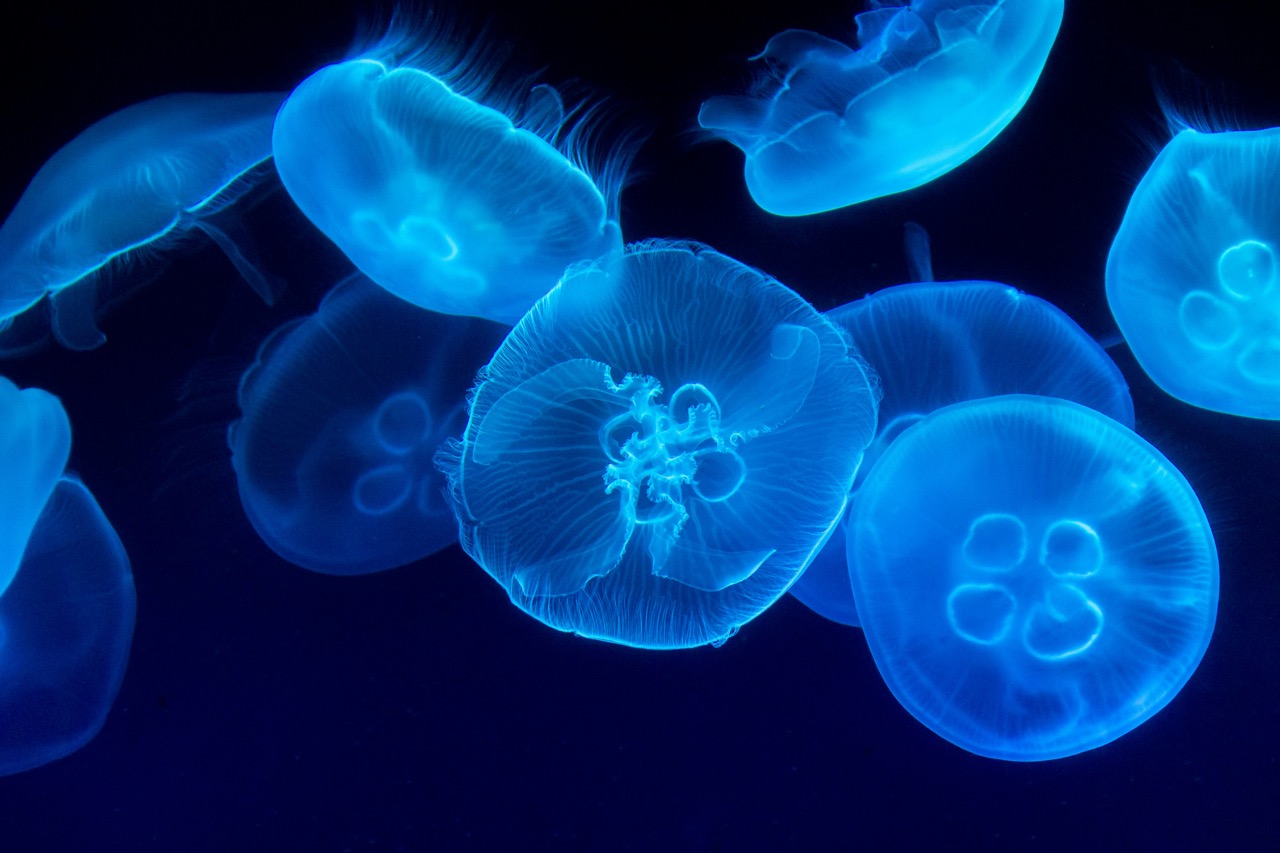



Mention the Whitsundays to someone who has never been here before and, sooner or later, the conversation often turns to jellyfish.
“Isn’t it dangerous to swim there?”
“Are there deadly jellyfish everywhere?”
“Can you even go in the water?”
The short answer is yes, you can swim in the Whitsundays — and thousands of people do every year. But, like many things at sea, there is a little more to the story.
The Whitsundays are part of the tropical Queensland coastline, which means that certain species of jellyfish can be present in the waters, particularly during the warmer months. The two groups that receive the most attention are box jellyfish and the much smaller Irukandji jellyfish. Both can cause serious illness, and nobody should dismiss the potential risk.
But this is where the myth sometimes takes over. The idea that the Whitsundays are full of deadly jellyfish waiting beneath the surface is simply not an accurate picture of what it is like to spend time on the water here. The reality is much more nuanced.
“Stinger” is a general term commonly used in northern Australia for jellyfish capable of delivering a painful or medically significant sting. Not every jellyfish is dangerous, and not every jellyfish encounter results in a serious injury. The two species groups of greatest concern are:
When people hear the words “box jellyfish”, they often imagine a tiny, invisible creature drifting somewhere beneath the boat. In reality, the best-known dangerous box jellyfish in northern Australia, Chironex fleckeri, can be considerably larger.
Chironex fleckeri is sometimes referred to as the Australian box jellyfish or sea wasp. Its bell can grow to around 20–30 centimetres across, while its long, delicate tentacles can extend several metres.
Those tentacles contain specialised stinging cells called nematocysts. When they come into contact with skin, these cells can fire microscopic structures that inject venom. A significant sting can cause intense pain and, in severe cases, potentially life-threatening cardiovascular effects.
This is why box jellyfish should never be treated casually.
However, there is an important distinction to make.
The presence of box jellyfish in tropical Queensland waters does not mean that every swimmer is surrounded by them. Their distribution is influenced by environmental conditions, tides, currents and water temperature, and their numbers and locations can vary.
They are also generally associated with shallow coastal waters, particularly around beaches and river mouths, which is one reason local swimming advice and designated swimming areas are important.
And there is another misconception worth clearing up: you cannot reliably identify a dangerous jellyfish simply by looking at the water. Some jellyfish are almost transparent and extremely difficult to see, even in clear tropical water.
That’s why, during periods when stingers are more likely, the sensible approach isn’t to try to become an expert jellyfish spotter.
It’s to reduce your exposure.
A properly fitted stinger suit provides a physical barrier between much of your skin and the water, while following local warnings and swimming advice adds another important layer of protection.
For us at Mainstay Sailing, this is the philosophy we prefer: Don’t fear the water. Understand it, respect it and take sensible precautions. That is a much better message than either extreme — pretending stingers don’t exist or making people believe the Whitsundays are a giant jellyfish trap.
If the Box Jellyfish is impressive because of its size and potent venom, the Irukandji is almost the opposite.
These jellyfish are remarkably small. Some species can have a bell only a few centimetres across, making them extremely difficult to see in the water. And unlike the large Box Jellyfish, an Irukandji can be almost impossible for a swimmer to spot before contact.
The name Irukandji actually refers to a group of very small jellyfish rather than one single species. Several species are capable of causing what is known as Irukandji syndrome. And this is where things get particularly interesting.
An Irukandji sting can initially feel relatively mild. There may be a small red mark or some localised discomfort, and the person may initially think:
“That wasn’t too bad.”
But that can change.
Symptoms of Irukandji syndrome can develop some time after the initial sting, rather than immediately. The person may experience severe back or abdominal pain, intense muscle cramps, headache, nausea, vomiting, sweating, anxiety and a feeling of tightness in the chest. In more serious cases, the body’s cardiovascular system can be affected, potentially resulting in dangerously high blood pressure and other complications. This delayed reaction is one of the reasons Irukandji stings need to be taken seriously.
That’s one of the remarkable things about these animals. Jellyfish don’t have teeth, claws or a traditional mouth designed to attack prey. Instead, their tentacles contain microscopic specialised cells called nematocysts. When triggered by contact, these cells rapidly fire tiny structures into their target and deliver venom. And you don’t necessarily have to see the jellyfish for this to happen. A person swimming through the water can encounter the tentacles without ever seeing the animal responsible.
No.
And this is an important distinction. The fact that Irukandji can occur in tropical Queensland waters does not mean that the water is filled with them or that every person entering the sea is likely to be stung. Their distribution is influenced by environmental conditions, including water temperature, currents, tides and other factors. That’s why local knowledge and current conditions are much more useful than simply asking whether it is “stinger season.”
This is where sensible precautions come in. A stinger suit doesn’t make someone completely immune to a jellyfish sting, but it significantly reduces the amount of exposed skin. For sailors and visitors to the Whitsundays, that’s a very simple precaution with a lot of upside. And let’s be honest — once you’re wearing one, you also get excellent protection from the tropical Queensland sun.
The Irukandji is a fascinating animal, but it shouldn’t become a reason to be frightened of the Whitsunday marine environment. The ocean has always involved a degree of risk. The trick isn’t to eliminate every possible risk — that’s impossible. The trick is to understand the risks and manage them sensibly. At Mainstay Sailing, that’s exactly how we approach tropical stingers. We don’t tell our guests, “Don’t worry, there are no jellyfish.” And we don’t tell them, “Don’t go swimming because the water is dangerous.”
We explain the conditions, recommend sensible precautions and make sure people know what to do if something does go wrong. Because there’s a big difference between respecting the ocean and being afraid of it. And once you understand the difference, you can get back to what you came to the Whitsundays for in the first place: jumping off the boat, swimming in crystal-clear tropical water and enjoying one of the most beautiful marine environments on the planet. ⛵🌊
You will often hear that stinger season runs from around October through to May. There is good reason for this advice. Warmer water temperatures generally provide more favourable conditions for some tropical jellyfish, and the traditional “stinger season” is therefore the period when swimmers are encouraged to take additional precautions.
However, nature doesn’t follow a calendar. Jellyfish don’t suddenly appear on 1 October and disappear on 1 May. Their presence can vary depending on water temperature, currents, weather and other environmental conditions. That is why sensible precautions and current local advice are more useful than relying on a particular date on the calendar.
Absolutely not.
One of the great pleasures of sailing the Whitsundays is getting into the water. Swimming, snorkelling and exploring the incredible marine environment are a huge part of the experience. The answer isn’t to avoid the water. It’s to respect the water.
During periods when stingers may be present, wearing a properly fitted stinger suit provides an additional layer of protection. These suits cover most of the body and reduce the amount of exposed skin available to a jellyfish. They are also surprisingly useful for another reason. They help protect you from the sun. Two problems solved with one rather fashionable piece of lycra.
This is another area where perception and reality can differ. When you’re anchored in a beautiful Whitsunday bay and looking over the side into crystal-clear water, it is perfectly understandable to wonder what might be swimming below you. But there is no magical “safe depth” at which jellyfish suddenly stop existing. Stingers can occur in a variety of marine environments, and their distribution can change with conditions. At Mainstay Sailing, we therefore don’t rely on assumptions such as “we’re offshore, so there won’t be any stingers.” Instead, we take sensible precautions based on the conditions, the season and current local advice. That’s seamanship.
This is where the myths become particularly important.
If you suspect that someone has been stung by a jellyfish, get them out of the water and seek medical assistance immediately.
Do not simply assume that a small sting is harmless, particularly if symptoms begin to develop.
The appropriate first-aid response can vary depending on the type of jellyfish involved, so following current Queensland emergency and marine safety guidance is important.
And if someone develops significant symptoms after a suspected jellyfish sting, treat it as a medical emergency.
Knowing what to do is far more useful than being frightened of what might happen.
The ocean contains risks. There are stingers, strong currents, changing weather, rocks, reefs, marine animals and plenty of other things that deserve our respect. But that doesn’t make the ocean something to fear. It makes it something to understand. We don’t stop sailing because the wind can become strong. We learn to read the weather. We don’t stop swimming because there may be jellyfish. We learn when additional precautions are appropriate. And we don’t need to turn the Whitsundays into a danger zone just because it is a tropical marine environment.
The “myth” of tropical stingers isn’t that they exist. They absolutely do. The myth is that they make the Whitsundays an unsafe place to enjoy the water. With sensible precautions, appropriate protective equipment and an understanding of the conditions, swimming and snorkelling remain some of the most memorable parts of a Whitsunday sailing adventure. So, if you’re joining us on board and someone asks: “Are there stingers in the Whitsundays?” The honest answer is: “Yes, they can be.” And if they follow that with: “So should I stay out of the water?” Our answer is: “Not necessarily. Let’s understand the conditions, take the right precautions, and then go sailing.” Because the Whitsundays are meant to be experienced — above and below the water.
The best sailors aren’t the ones who believe the sea is completely safe. They’re the ones who understand that the sea deserves respect — and who know how to enjoy it responsibly.
See you on the water.
Keep exploring the Whitsundays, sailing, seamanship and life on the water.
Check out our Youtube videos!

Coral Sea Marina
Shingley Drive
Airlie Beach
QLD 4802
AUSTRALIA
Postal address
PO Box 890
Cannonvale
QLD 4802
AUSTRALIA
Lat: 20° 16′ South
Long: 148° 43′ East
Phone: +61402429152

